



Vladimir
This website comprises 2,392 pages created for beginners and aquarium hobbyists. It contains essential guidelines on the acquisition and care of freshwater aquarium fishes (681 genera, 2,290 species, including 728 cichlids), 101 shrimp species, 85 snail species, 33 crayfish species, and 16 crab species. The maintenance requirements for 248 aquatic plant species, 38 ferns and mosses, and 17 algae species are detailed. This information is complemented by 2,292 videos. In addition, 52 fish diseases, their diagnostics, and treatment procedures are covered, along with 607 aquarium hobby articles enhanced by 722 videos. The site is continuously updated with new data and materials.
Welcome to our website, “For Aquarium Fish Lovers”, dedicated to aquarium keeping, freshwater fishes, and aquatic plants! We have gathered the most useful, practical, and fascinating information from the wonderful world of fishkeeping. Here you will find extensive guidance on how to set up and maintain a thriving aquarium. If you are captivated by the underwater world but have never kept an aquarium before, our site gives you an opportunity to learn from the experiences of seasoned hobbyists. The name of our website speaks for itself: it is dedicated to our tank inhabitants—aquarium fishes. You will discover the fundamental requirements for keeping various species, covering both popular classics and rare, exotic varieties. We hope this site will become an invaluable companion in your aquarium hobby.
 The pages of this site bring together comprehensive aquarium knowledge beneficial to beginners and seasoned hobbyists alike. Latin species names are aligned with the FishBase database. This is primarily an educational reference site focused on care and maintenance; it does not cover commercial breeding, as that requires specialized facilities and advanced expertise. An aquarium is a living slice of nature inside your home. Lush green aquatic flora delights the eye, while the vivid colors of fishes gliding among the plants captivate our attention. Watching an aquarium is deeply relaxing. The aquatic world offers a serene spectacle that invites quiet contemplation. Moreover, medical studies show that observing an aquarium normalizes blood pressure, rests the eyes, and reduces stress. Keeping one or more aquariums also balances indoor humidity in modern apartments, helping to lower the incidence of respiratory issues. Above all, an aquarium is genuinely beautiful, regardless of what species live within it.
Who Is This Website For?
This project serves as a comprehensive resource for newcomers taking their first steps into this fascinating aquatic hobby, for those contemplating their first tank, and for experienced aquarists looking for reliable reference data. The project continues to evolve: adding new profiles of aquarium fishes and plants, high-quality photographs, husbandry insights, and step-by-step guidance for beginners.
Keeping aquarium fish is a cherished hobby enjoyed by people of all ages and backgrounds. It allows those who cannot keep a dog or a cat—due to limited space, allergies, or health reasons—to experience the joy of having pets. Almost every home can accommodate a small tank. On the other hand, for many enthusiasts, fishkeeping evolves into a lifelong passion, inspiring the addition of a majestic show tank in the living room, multiple breeding tanks, a dedicated fish room, or even an outdoor garden pond, depending on where one’s enthusiasm leads.
Keeping aquarium fish is a cherished hobby enjoyed by people of all ages and backgrounds. It allows those who cannot keep a dog or a cat—due to limited space, allergies, or health reasons—to experience the joy of having pets. Almost every home can accommodate a small tank. On the other hand, for many enthusiasts, fishkeeping evolves into a lifelong passion, inspiring the addition of a majestic show tank in the living room, multiple breeding tanks, a dedicated fish room, or even an outdoor garden pond, depending on where one’s enthusiasm leads.
A Brief History
The word “aquarium” originates from the Latin word for water, aqua. An aquarium is an artificial body of water designed to sustain and culture aquatic animals and plants. The ancient Egyptians can be regarded as the earliest aquarists, having constructed decorative garden pools to observe fish over 3,000 years ago. Goldfish breeding in China has a thousand-year history and grew into a national art form. The first modern domestic aquarium was developed in 1841 by English naturalist N. Ward, and in 1856 German naturalist E. A. Rossmässler published the first European handbook on fishkeeping, entitled “The Lake in Glass”. Among the first exotic aquarium fishes introduced to Europe in the early 19th century were paradise fish and Siamese fighting fish (bettas).
 In nature, there are approximately 30,000 species of fish (both freshwater and marine). Around 1,500 of them are kept by aquarists. Most aquarium fishes are tropical freshwater species. Through generations of captive breeding, many have adapted, losing some wild traits while acquiring new ones. For example, some species have changed in size—either remaining smaller or growing larger than their wild counterparts. Several popular aquarium fishes do not exist in the wild at all, being the product of selective breeding: fancy goldfish, swordtails, guppies, discus, angelfish, and many more. While they descended from wild ancestors, they look remarkably distinct. Fancy goldfish look nothing like the Prussian carp from which they originated. Wild guppies have far more modest coloration than domestic strains, and female bettas have shifted from plain grey to vibrant hues. Long-finned varieties and albinos are likewise the result of selective breeding.
Aquarium Hobby
Aquarists broadly divide fishes into native and exotic species, though this distinction is largely conventional. In biological taxonomy, bony fishes (Osteichthyes) encompass around 40 orders. Only a few hundred species commonly kept in aquaria belong predominantly to four orders: Gasterosteiformes, Cypriniformes, Cyprinodontiformes, and Perciformes. Aquarium fishes are species kept in captive aquatic enclosures primarily for ornamental enjoyment. Most native habitats are tropical and subtropical freshwater ecosystems, requiring stable, moderately warm water temperatures typical of home indoor aquaria. Characteristic traits of most aquarium fishes include vibrant coloration, intricate body shapes, and manageable sizes.
Among the most fascinating aquarium residents are members of the cichlid family (Cichlidae). Cichlids are devoted parents, courageous territory defenders, skillful hunters, and breathtakingly beautiful fishes. Only in a cichlid tank can you witness a complex social hierarchy, territorial disputes, and collective care of fry by parent pairs. Observing aquarium fish is an enriching educational experience for both adults and children. By caring for fish, children acquire observational and regular caretaking skills, developing empathy, responsibility for living creatures, and emotional calm. An aquarium is an enchanting living world that unfolds its splendor only to attentive eyes; passing by with a quick glance reveals little, but pausing to look closely transports you into an underwater fairy tale.
It is essential to remember that beyond being decorative, an aquarium fish is first and foremost a living animal. For your fishes to thrive and delight you with their colors, they require attentive care and routine aquarium maintenance. One of the golden rules of fishkeeping is to perform regular partial water changes—replacing at least 25–30% of the tank volume with conditioned, temperature-matched water at least once every two weeks.
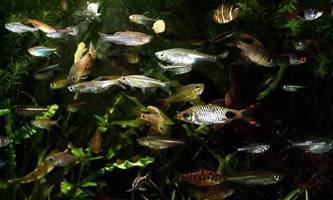 Selecting tank inhabitants can follow two approaches: geographical or biological. In a geographical biotope aquarium, conditions, hardscape, and species replicate a specific natural river or lake system. A community or biological aquarium is often simpler to maintain, grouping fishes and plants that share compatible water chemistry, temperature, and dietary needs. Ideally, tankmates should share similar sizes and temperaments. There should be no intense competition for food, and stocking density must be carefully managed. Oxygen availability is paramount: fish can quickly suffer from oxygen deprivation if overcrowded. If the water surface and volume are limited, active aeration is essential. Certain peaceful species get along well in many community setups. For example, bottom-dwelling catfish like Corydoras and Ancistrus (bristlenose catfish) are reliable favorites. Ancistrus even assist with tank maintenance, using their suction mouths to graze nuisance microalgae from driftwood and glass.
In a properly balanced aquarium, an appropriate balance of fish and plants live in harmony. Stable water temperature, balanced lighting, and a mature biological cycle are maintained under the hobbyist’s watchful care. Fish coloration in nature reflects their environment: most have a dark dorsal surface that blends into the substrate when viewed from above, and a light belly that blends into the surface light when viewed from below. Vertical bars camouflage fish among dense plant stems, while mottling conceals bottom dwellers. A fish’s coloration also reflects its health and comfort: in ideal conditions, colors become vivid and intense, especially in breeding males. Fading coloration often signals stress—perhaps the water is too warm, water parameters are off, or lighting is inadequate. Every species has distinct environmental preferences.
The variety of modern aquarium equipment available today is immense. While exploring different brands takes time, most filters, heaters, and lighting fixtures function on identical physical and biological principles, differing mainly in build quality and convenience. Creating an exquisite living display in your interior is entirely within reach. Today’s hobbyists can acquire everything needed: aquariums of any size or form, fishes of magnificent colors, diverse live plants, and stylish aquascaping materials.
Embarking on the aquarium hobby means learning that theory and practical experience go hand in hand. Both should be acquired together. That is why our site provides clear, accessible practical and theoretical insights: how to set up an aquarium correctly from day one, avoid frustrating beginner mistakes, build DIY solutions, and troubleshoot problems effectively. Initial hurdles are completely normal for every newcomer, so never feel discouraged.
This website brings together a wealth of information based on authoritative domestic and international scientific literature. The site is actively maintained, with ongoing updates and regular additions of new articles.
 aquafisher.ua@gmail.com


